The core difference
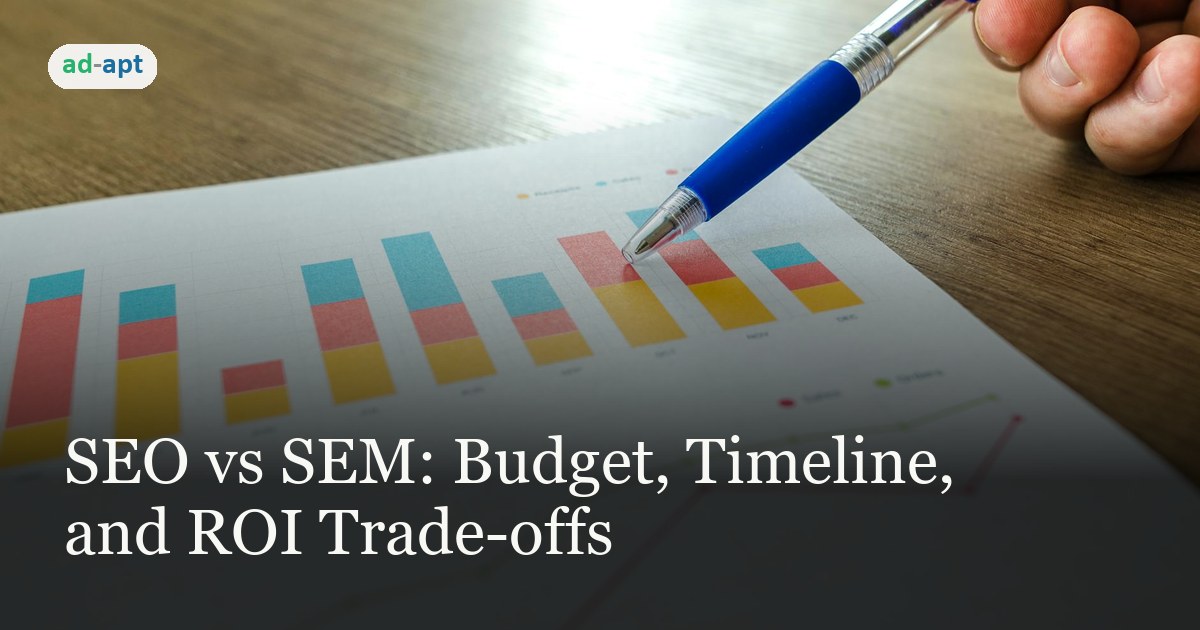
SEO and SEM both drive search traffic. But they operate on different mechanics.
SEM (paid search) is PPC advertising on Google, Bing, or other search engines. You bid on keywords. Your ad appears at the top. You pay per click. Traffic stops the moment your budget runs out.
SEO (organic search) is ranking your content naturally in search results. No per-click fees. Once you rank, impressions keep coming. But it takes months—sometimes years—to get there.
When to run SEM
Use paid search when you need traffic now.
- Immediate visibility: Your ad runs the same day you launch the campaign. Useful for product launches, seasonal campaigns, or brand awareness pushes.
- Clear ROI tracking: PPC platforms give you conversion data instantly. You know what each click costs and what it generates in revenue. Easy to audit.
- Keyword competition is steep: If your niche is crowded, SEO may take 12+ months to rank. SEM lets you compete immediately while you build organic visibility.
- Budget is set and monitored: You control spend. Once the budget depletes, so does traffic—but you don't overspend without knowing why.
The catch: SEM requires discipline. Bad keyword targeting, weak ad copy, or poor landing pages waste money fast. Many businesses under-invest in PPC expertise and burn budgets on low-intent clicks.
When to invest in SEO
Use organic search when you can wait and compound over time.
- Long-term traffic compounding: Once you rank, impressions keep coming. Month 12 and month 24 often deliver more traffic than the initial ranking month because your content authority grows and ranking positions improve.
- Lower ongoing cost: There's no per-click fee. Maintenance is cheaper than SEM. This makes SEO ideal if your budget is tight but your timeline is flexible.
- Lower search volume keywords rank faster: Niche, low-volume terms get easier rankings. If you target "luxury leather briefcases" instead of "briefcases," SEO moves faster.
- Content becomes an asset: Unlike PPC ads that disappear, content compounds. It ranks for related keywords over time. It gets linked to. It generates referral traffic outside search.
The trade-off: SEO demands content quality. Thin, mediocre content ranks nowhere. You need expertise in keyword research, user intent, content structure, and technical optimization. This takes time and often requires hiring writers, strategists, or an agency.
The hybrid approach
Most mature businesses run both.
Use SEM to capture high-intent traffic while you build SEO. If you're launching a new product category, run paid ads immediately. Use that paid traffic and conversion data to refine messaging, landing pages, and user intent signals. Feed those insights into your SEO content strategy. Once SEO rankings take hold, dial back SEM spend on high-volume terms you're now ranking for.
This hybrid model balances short-term revenue with long-term growth. You hit revenue targets now. You build a lasting organic moat over 12–24 months.
How to decide
Choose SEM if: You need results in weeks, have a defined budget for PPC, or face heavy keyword competition. You're willing to spend on management if you're not running it yourself.
Choose SEO if: You have 6–12 months to wait, can invest in quality content, or are in a lower-competition niche. Your lifetime customer value is high enough to justify the upfront content investment.
Choose both if: You have budget for both, need near-term wins and long-term growth, or operate in a competitive market where visibility at every stage matters.
The winner isn't SEM or SEO. It's the combination that matches your timeline, budget, and competitive position.